Chimney Siding Replacement and Rot Repair in Kitsap County
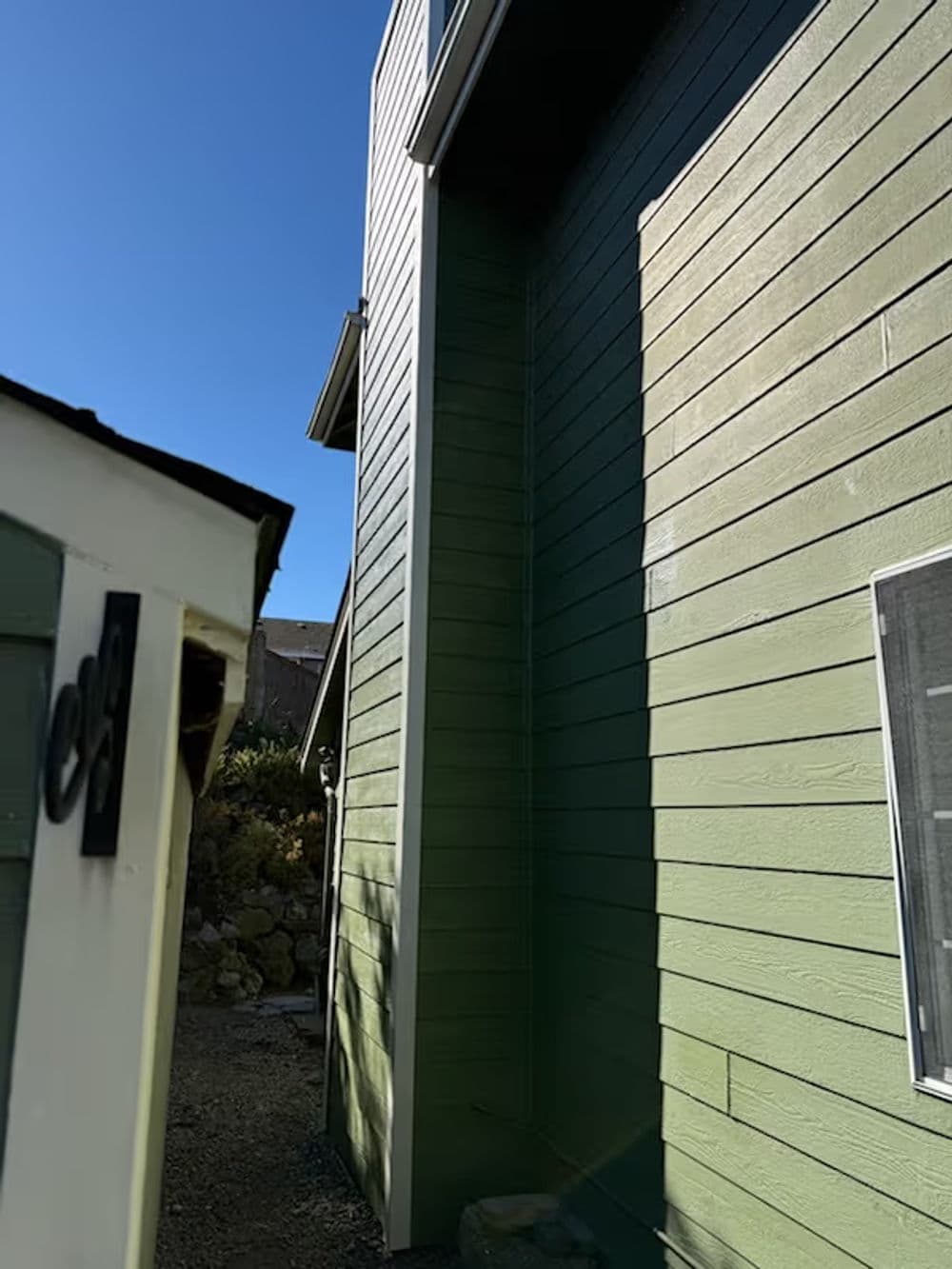
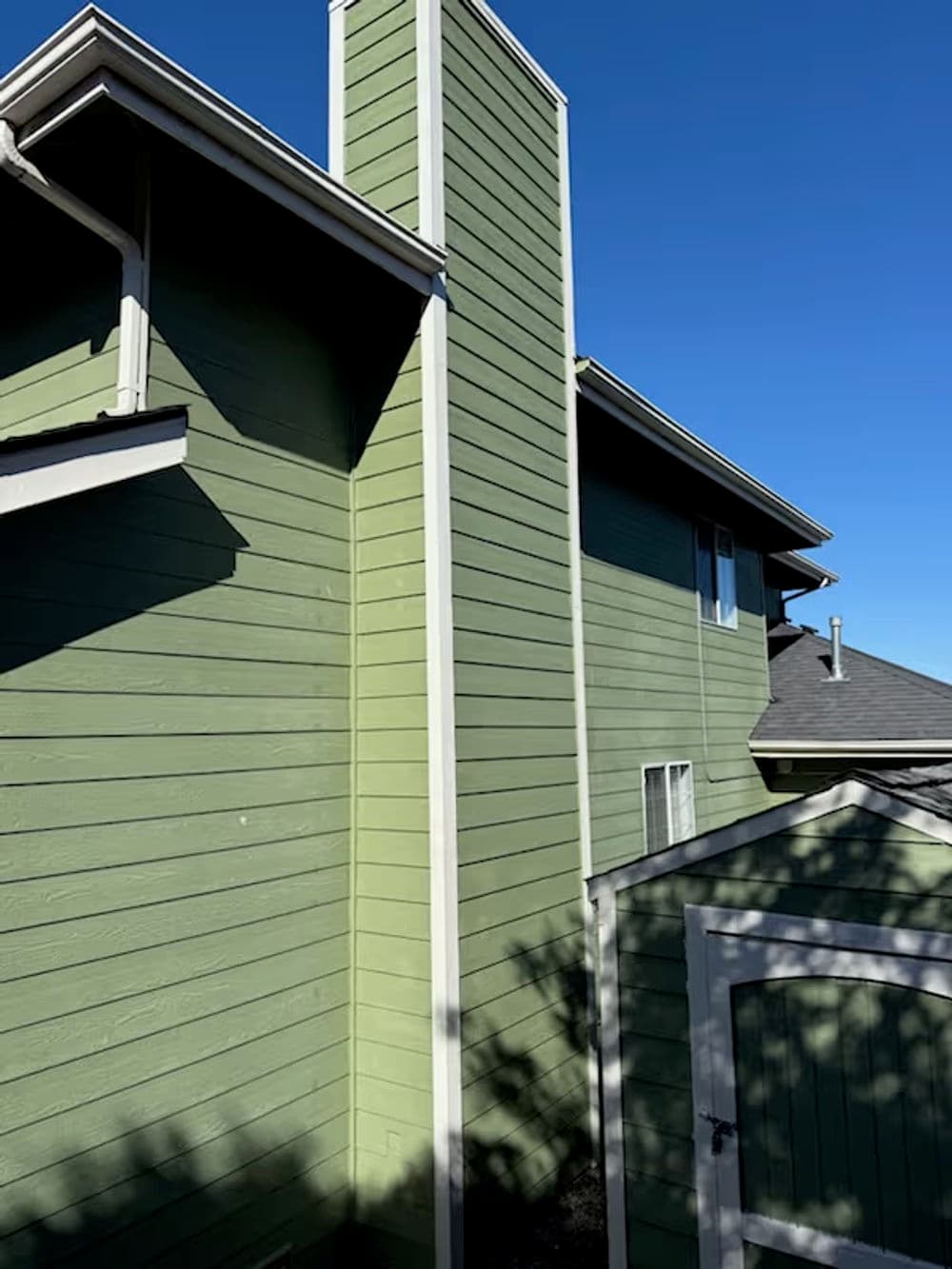
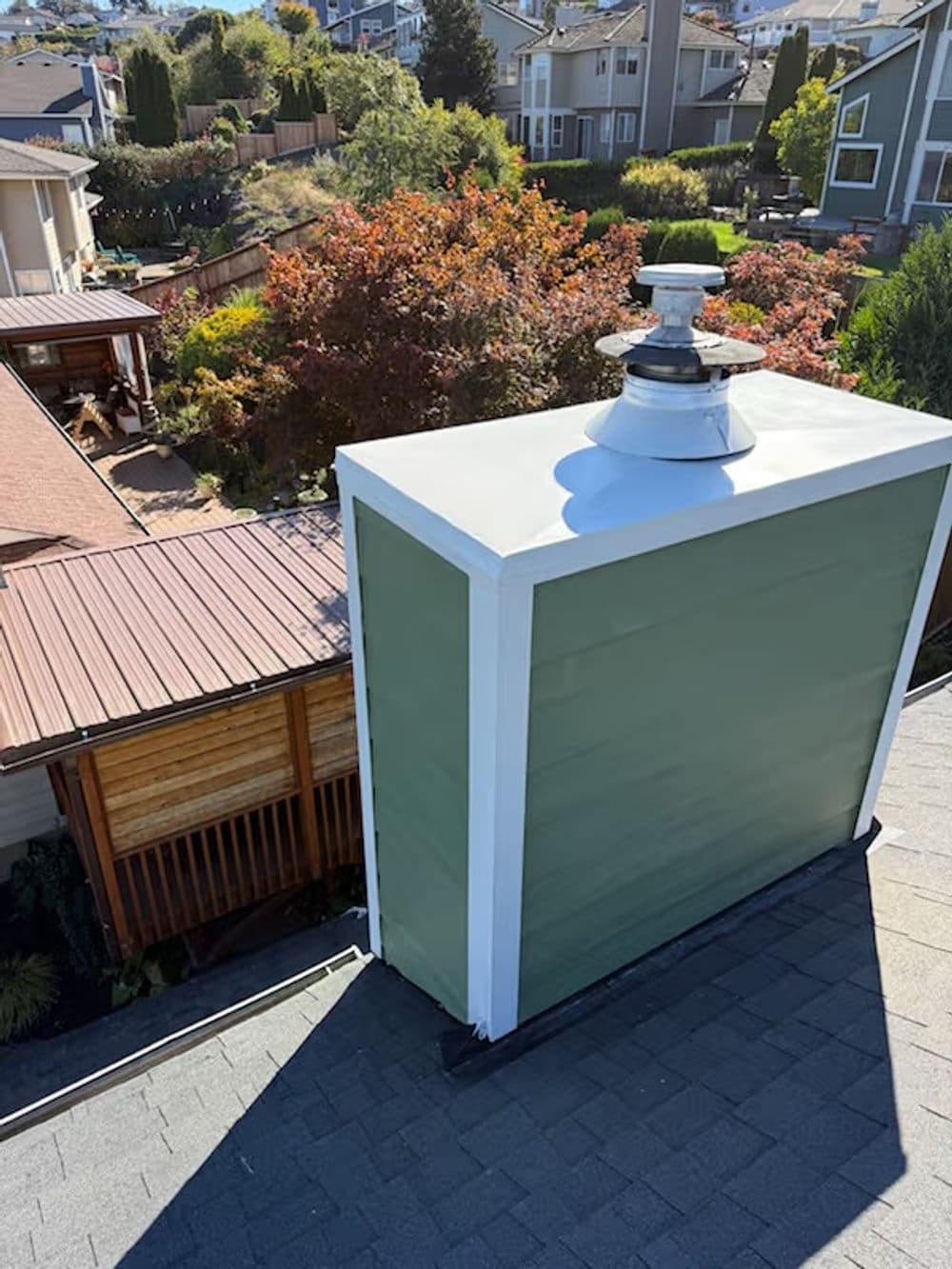
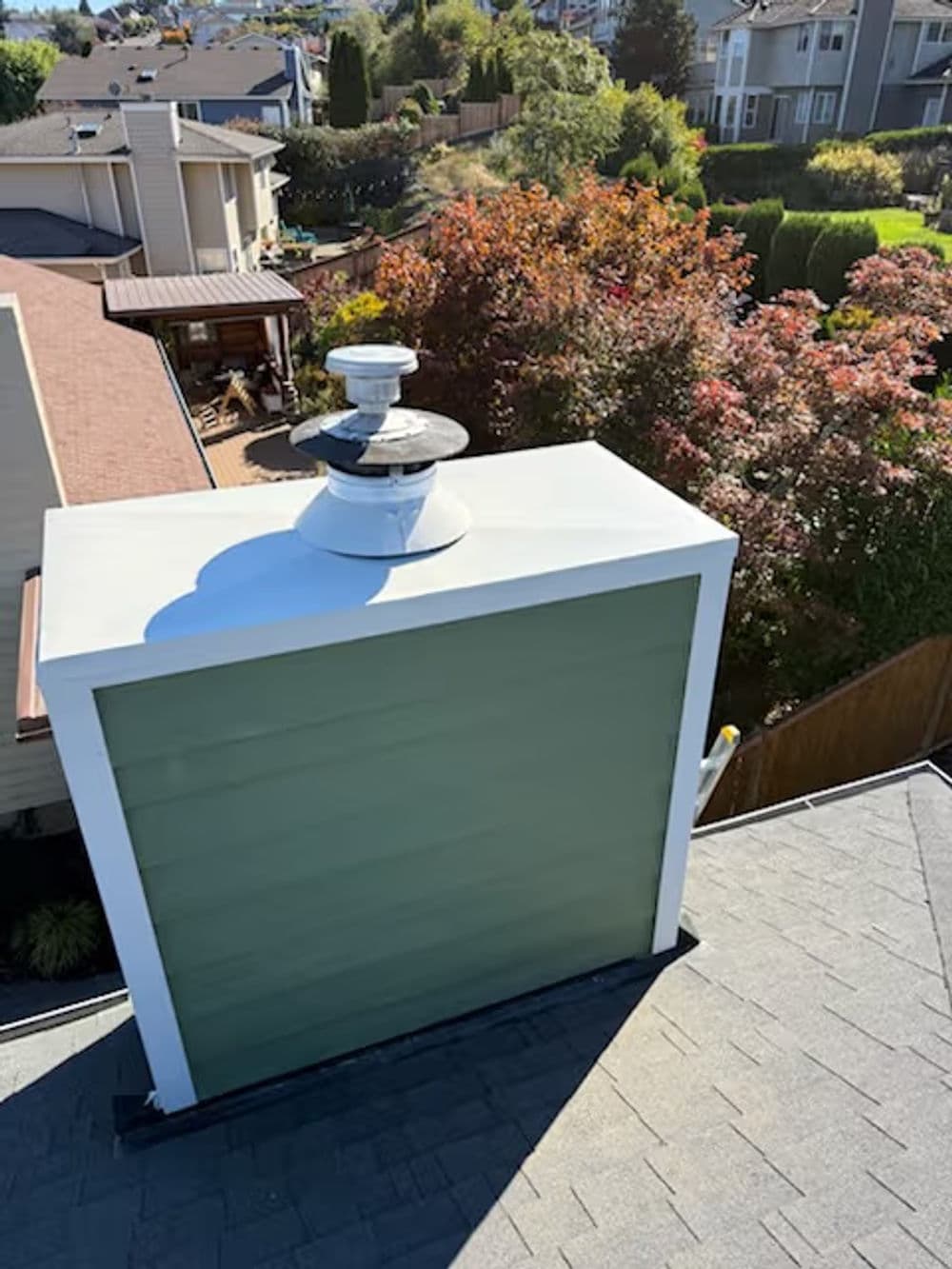
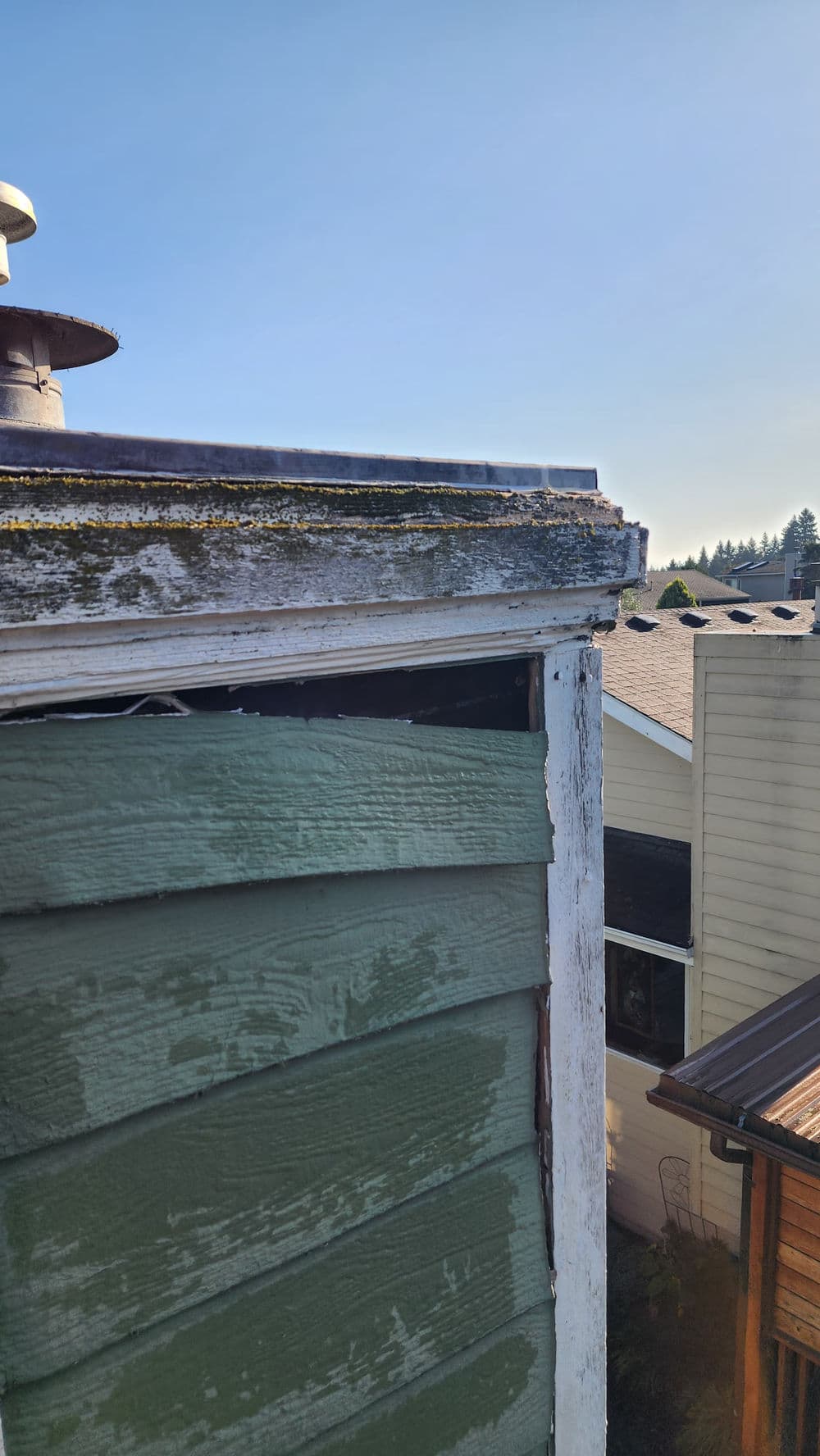
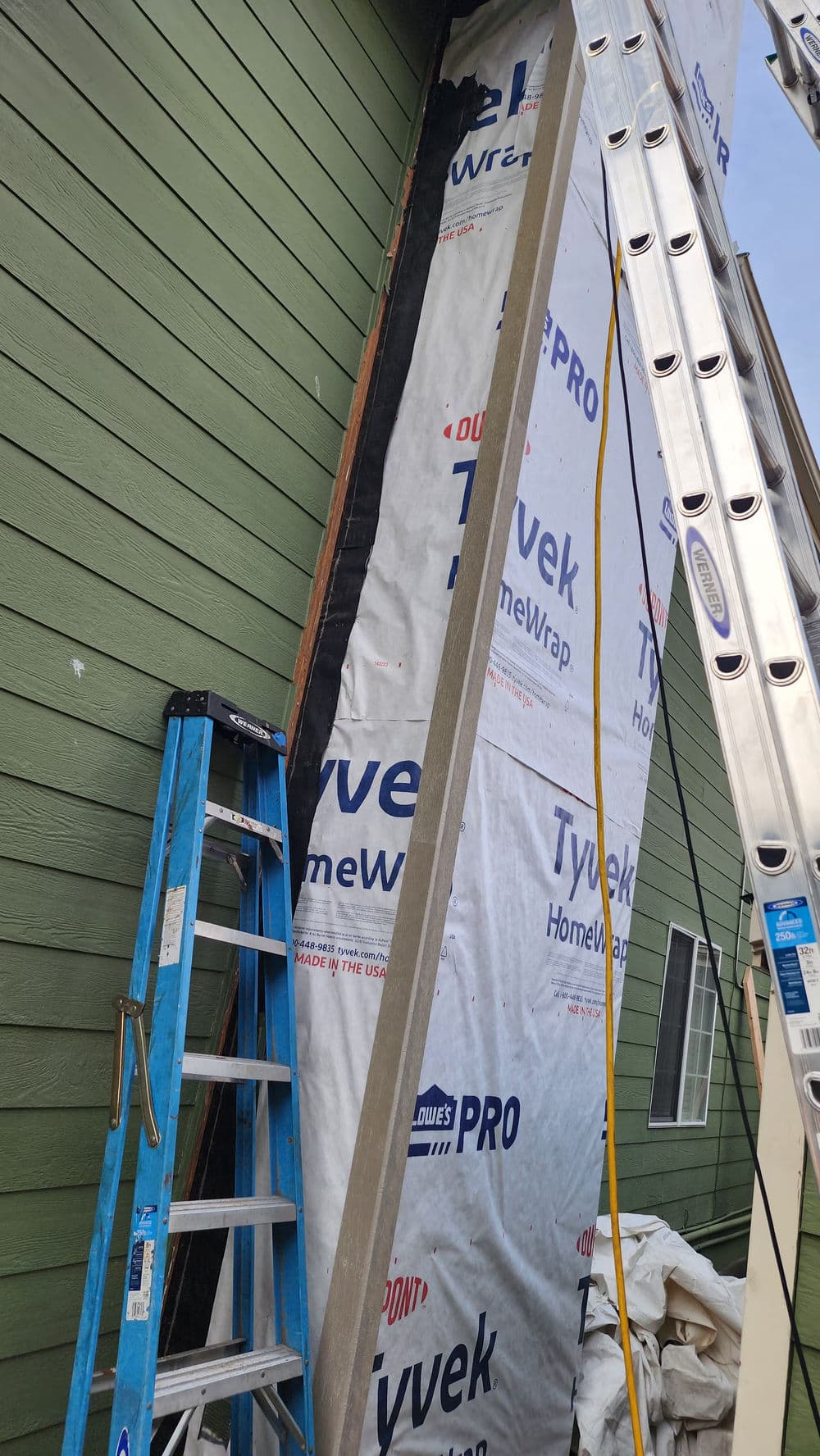
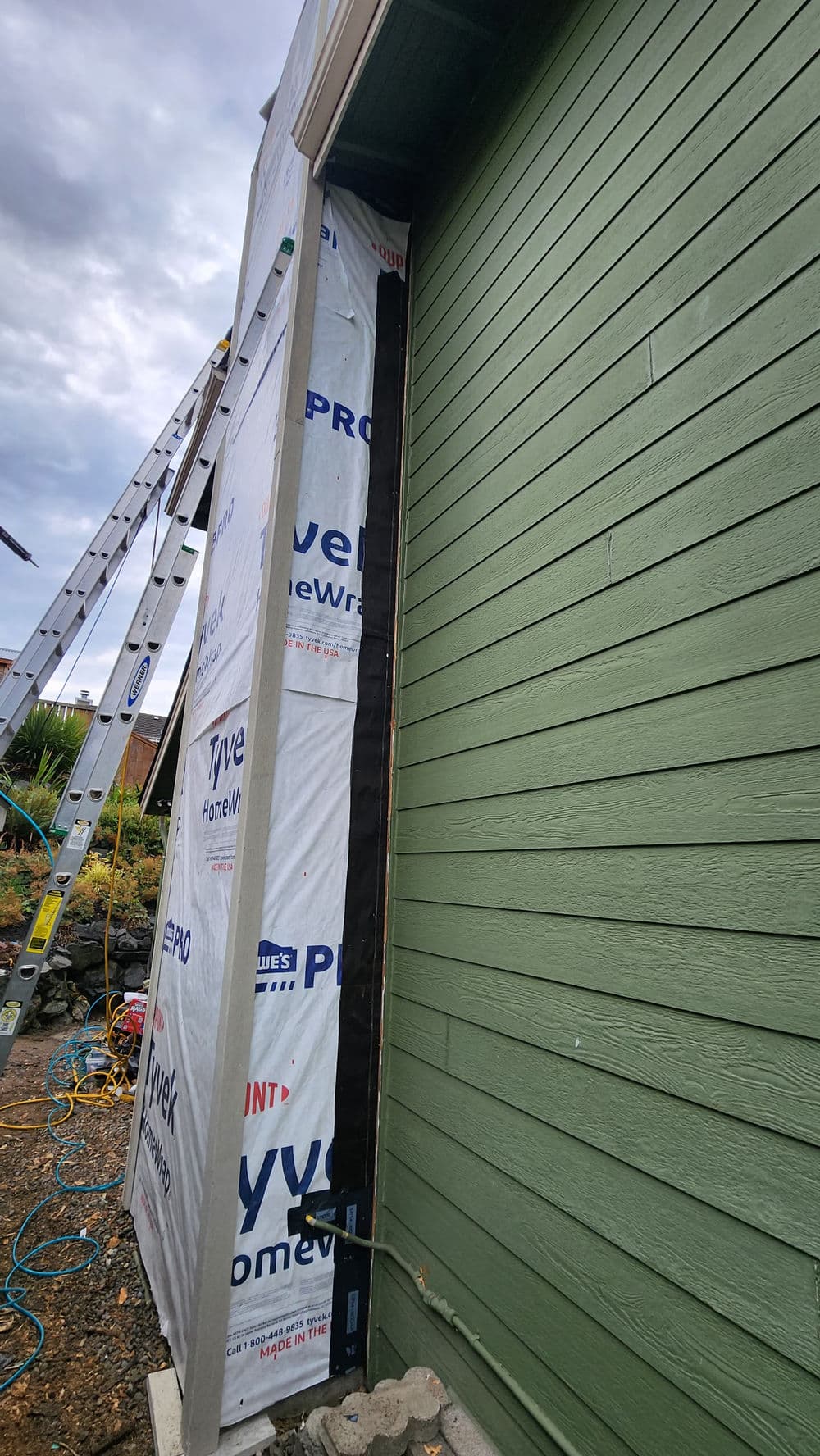
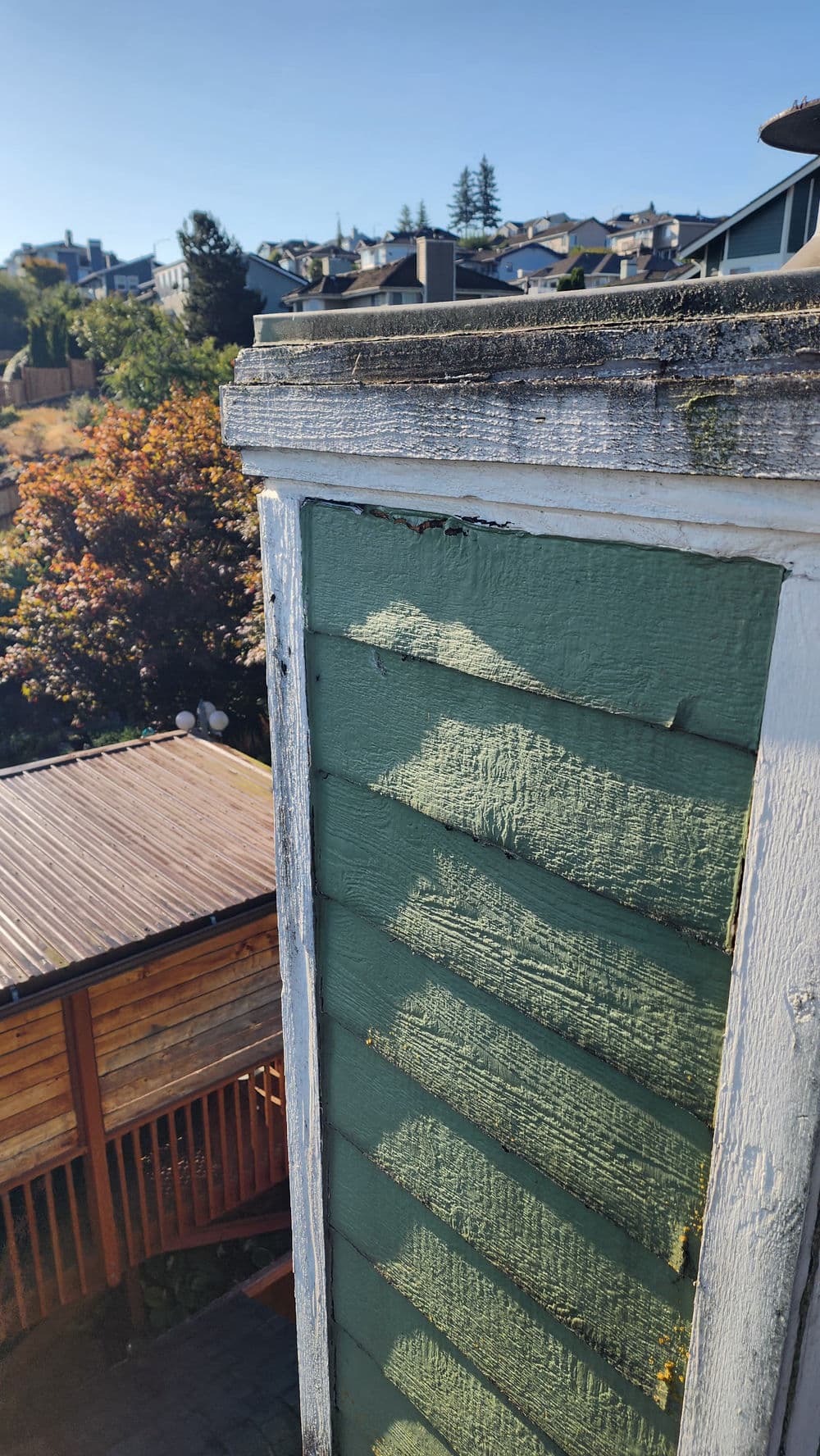
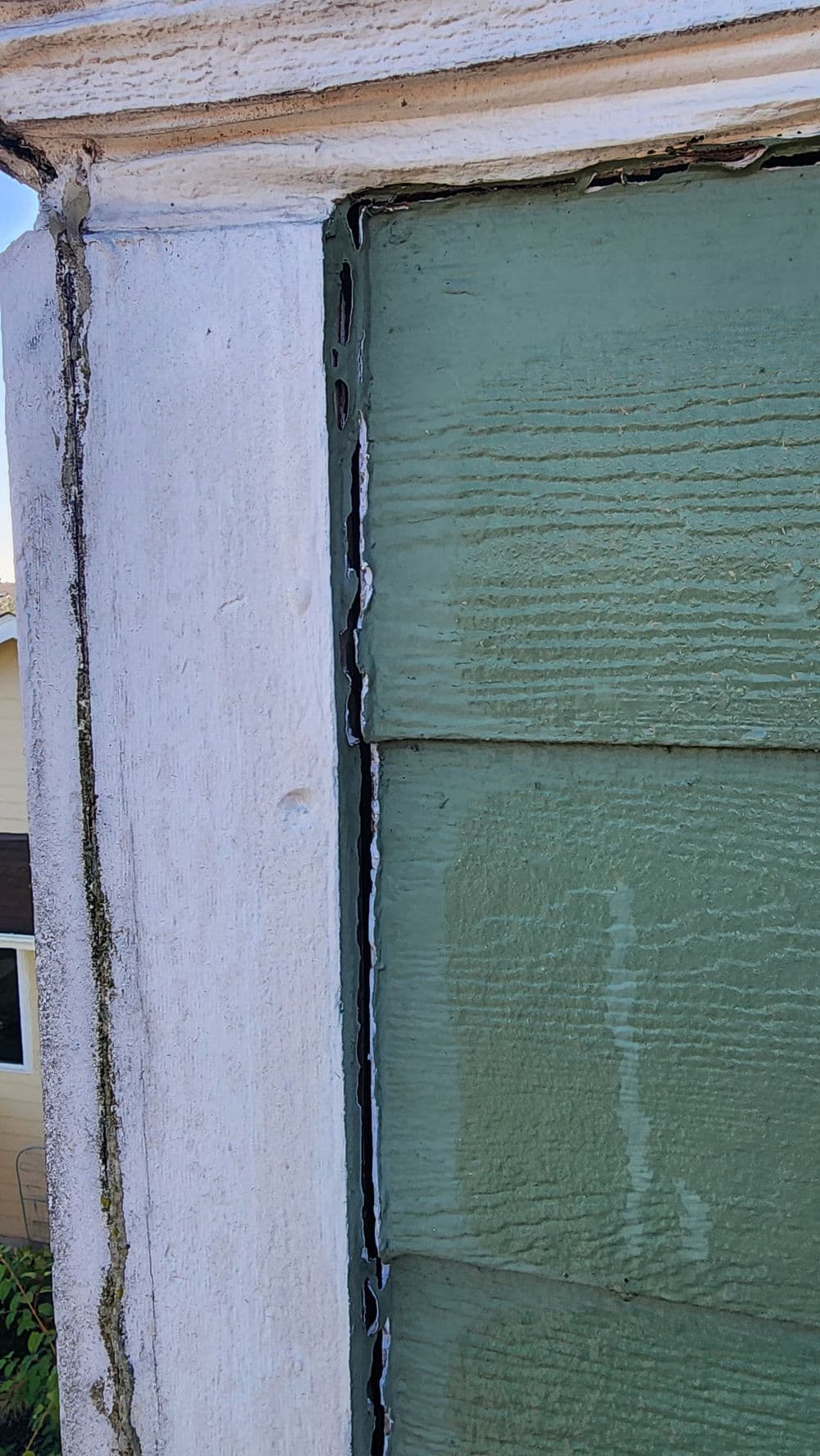
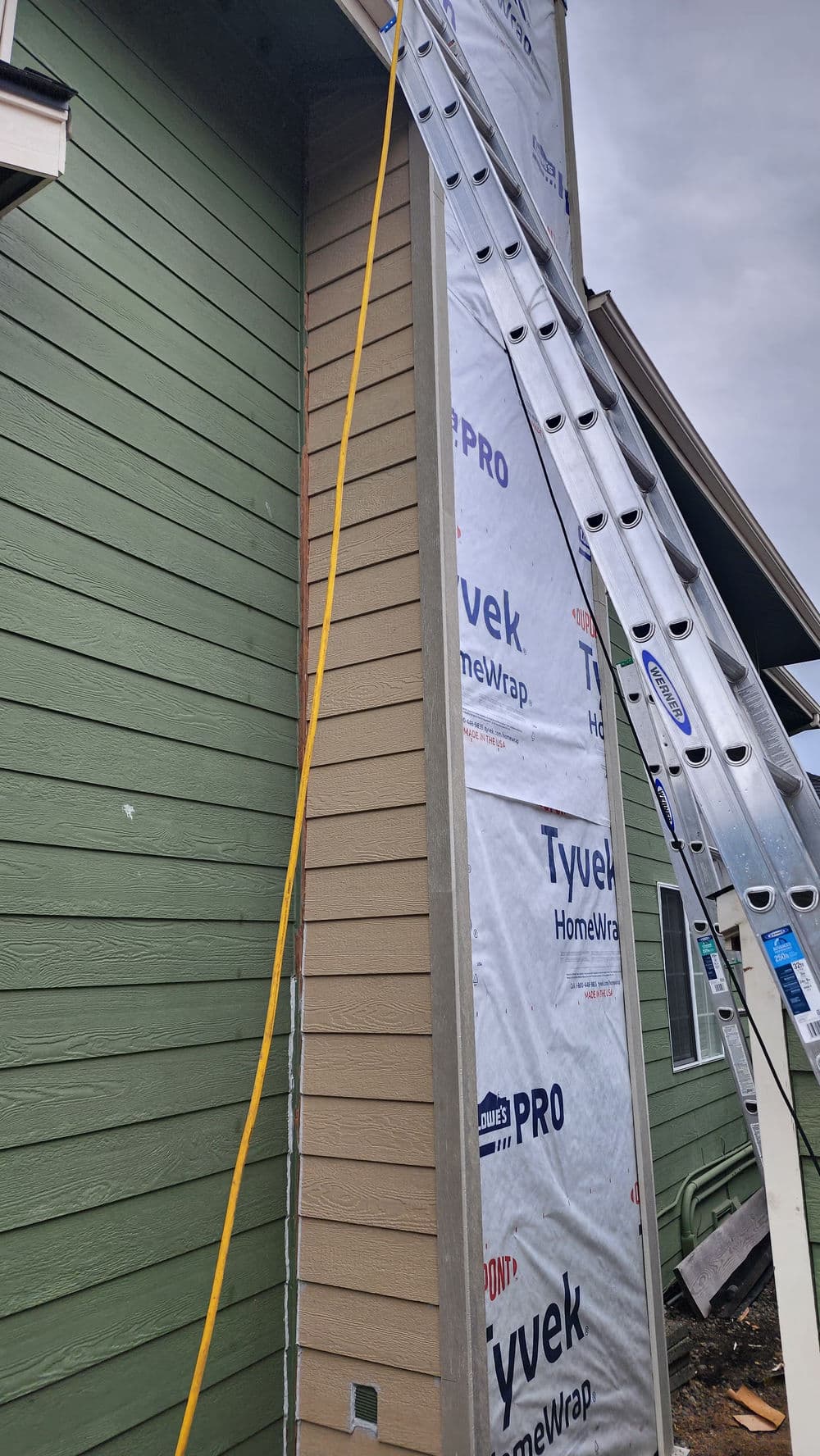
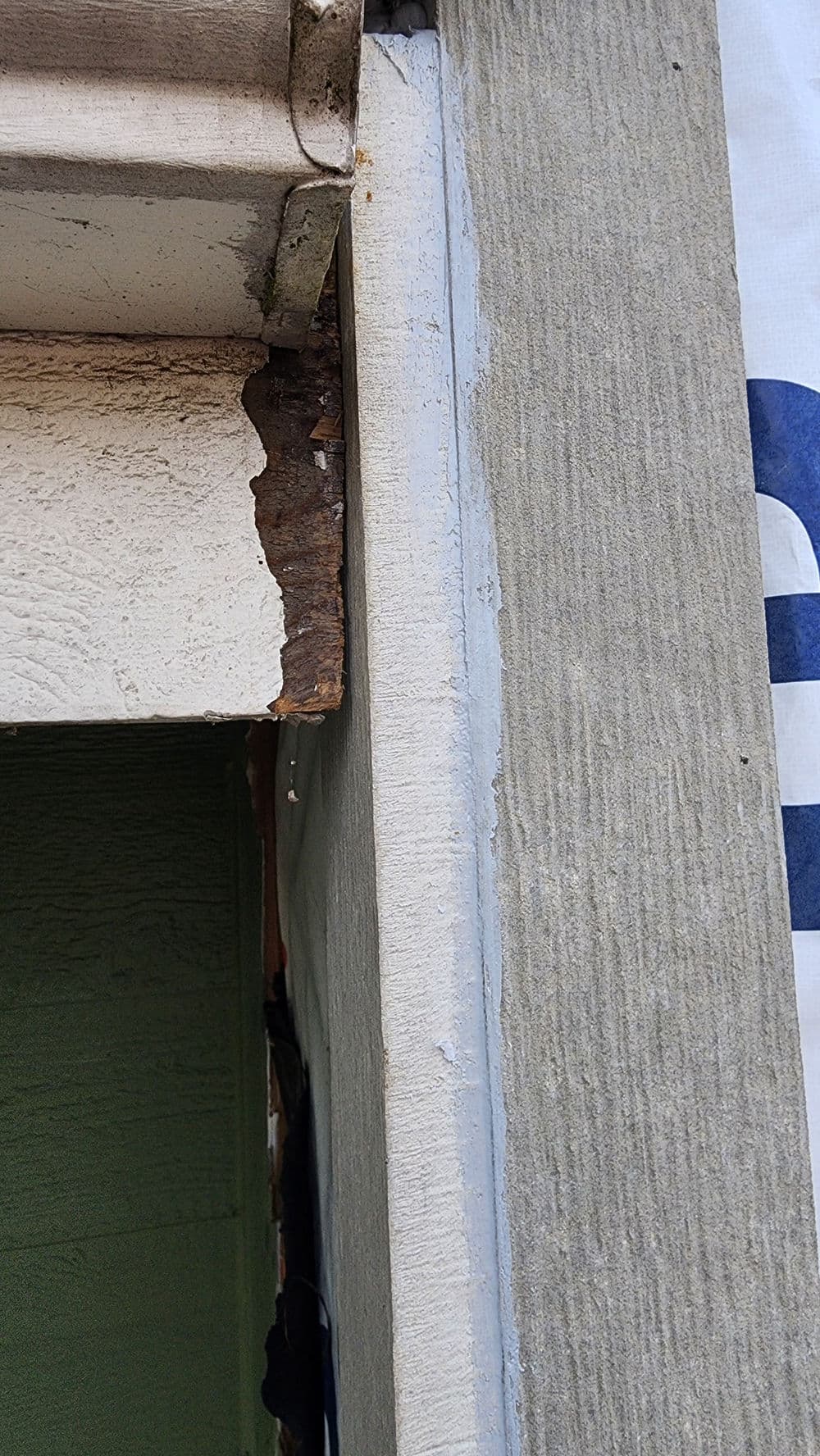
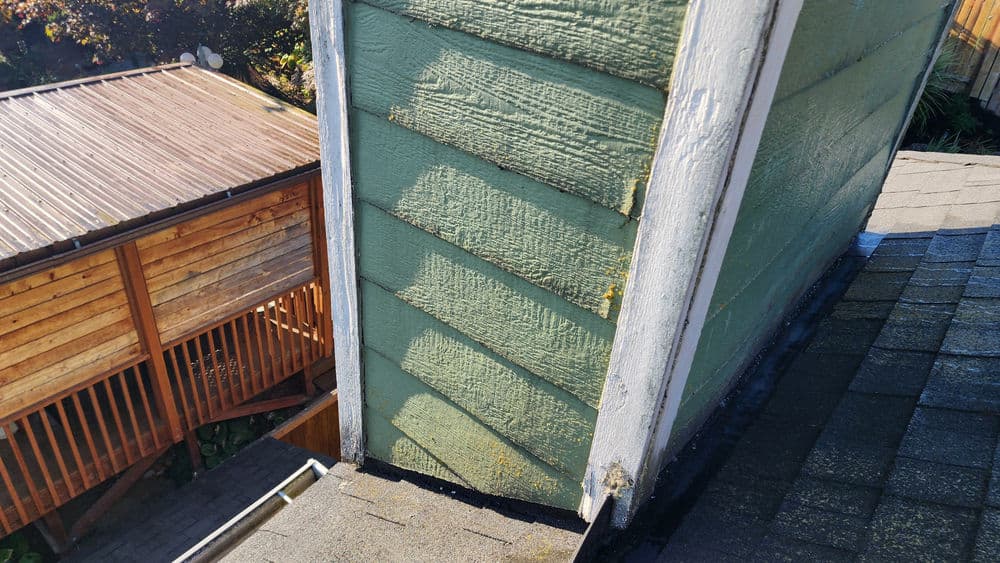
This job is a good example of what we find when we start pulling back old siding on a chimney chase. From the street, it just looked like faded, chalky paint and some failed caulk lines. But once we got up close and started demo, there was deep wood rot in the trim boards and the cap was failing - open gaps where water had been working its way in for years. Not a cosmetic issue. A structural one.
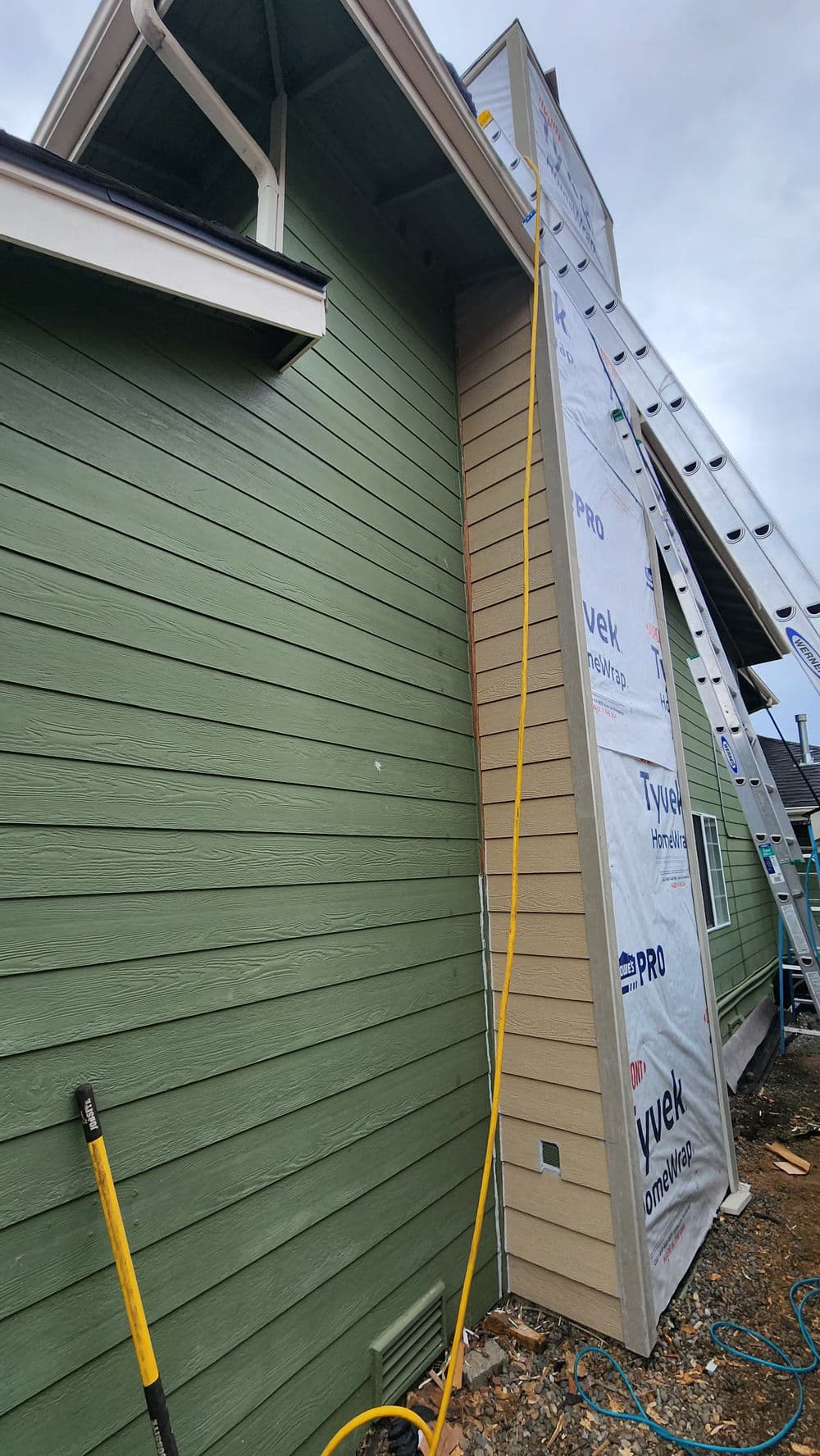
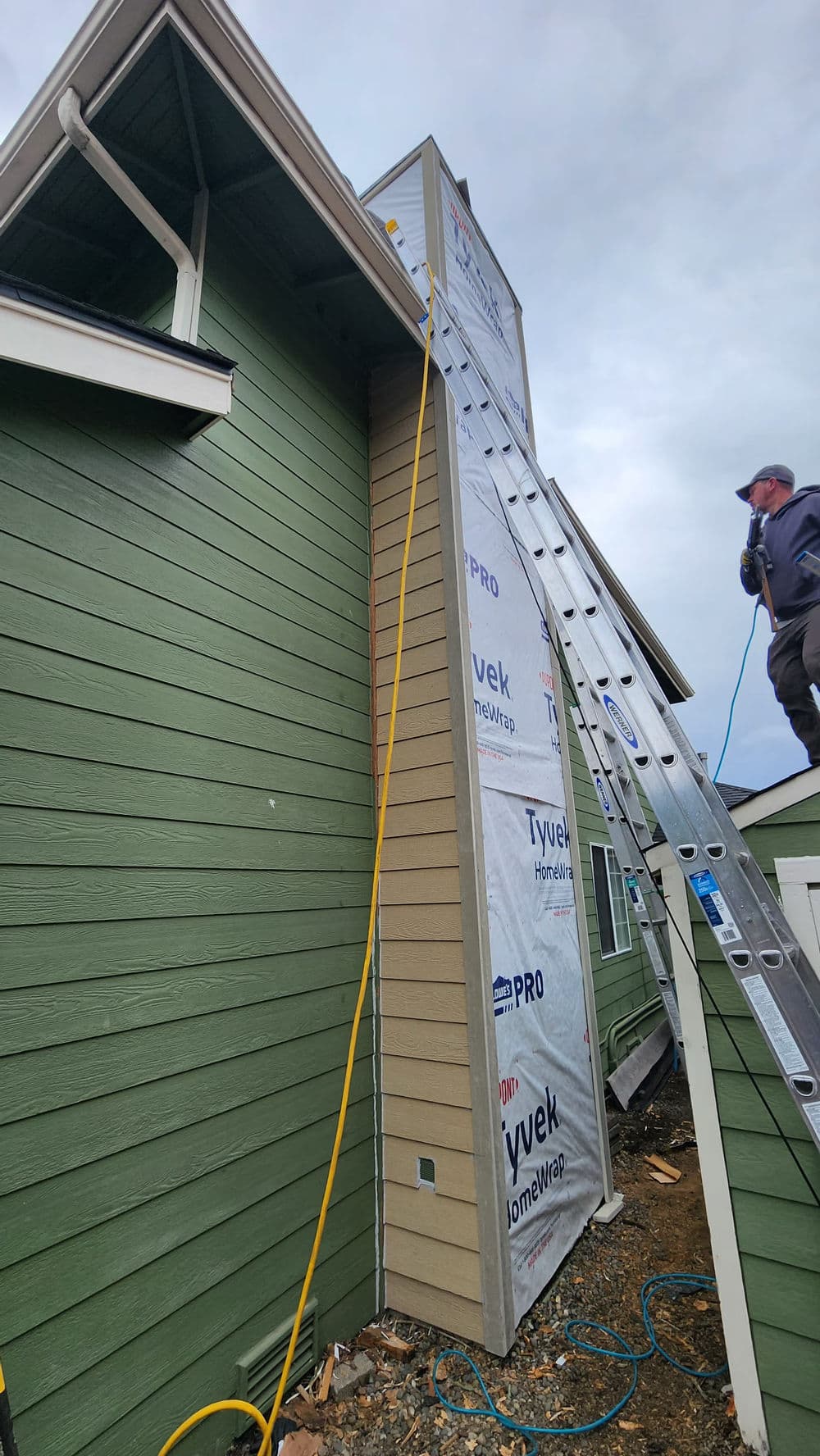
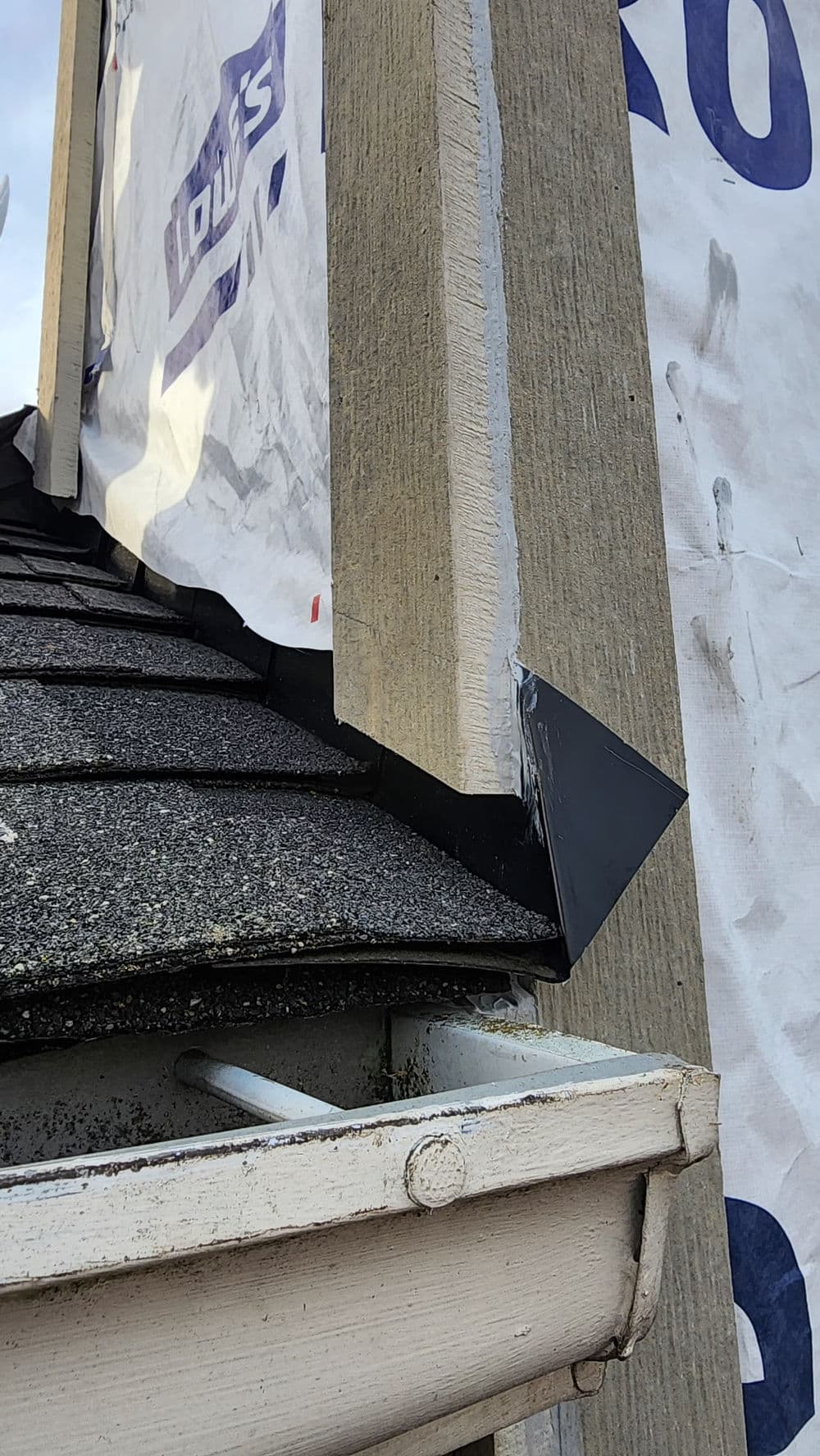
We stripped everything back, installed Tyvek housewrap over the full chimney chase, and set fresh fiber cement siding to replace what came off. The flashing at the roofline was redone as well - you could see the old step flashing had completely given up. New metal kick-out flashing was fit tight against the new trim before the siding went on. Every layer matters here, especially on a chimney that takes direct weather exposure from every direction.
Chimney chases are one of the most neglected spots on a house. They stick up above the roofline, they get full sun and rain, and the paint and caulk on the trim boards almost always fails before anyone notices. By the time the paint is chalking and cracking the way it was on this one, water has usually already been getting in somewhere. The rot we found in the trim and at the cap was a direct result of that.
The finished product is clean. Fresh siding and trim painted to match the rest of the house, a solid cap, and proper flashing at every transition. Homes in Kitsap County deal with a lot of moisture year-round, and that's especially hard on anything high up and exposed like a chimney chase. Doing it right means thinking about every point where water could find a path in - and sealing all of them.